
What is an Amortization Schedule?
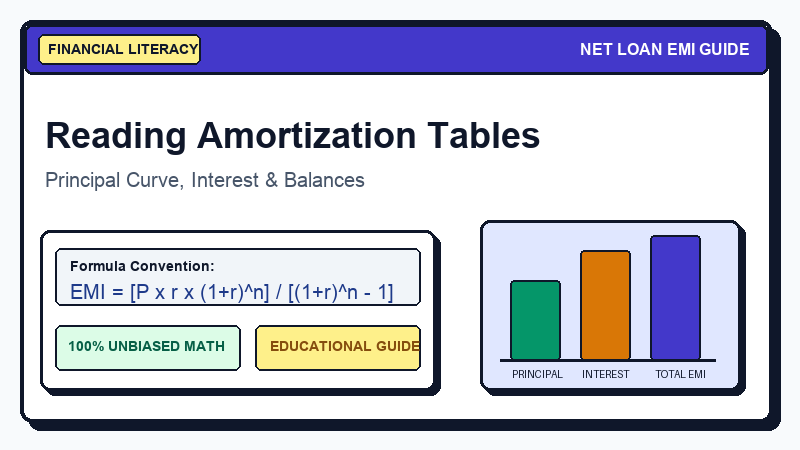
An amortization schedule is a comprehensive table detailing each periodic loan payment throughout the entire term. It discloses the exact breakdown of every installment into two essential elements: interest paid to the lender and principal used to retire the debt, alongside the remaining balance after every transaction.
While many borrowers focus only on the top-line EMI amount, reviewing the full amortization schedule reveals the underlying financial velocity of your loan.
Anatomy of an Amortization Table
Standard amortization tables feature six primary columns:
- Payment Index (Month / Year): The sequential chronological installment number (from Month 1 to Month 360).
- Opening Balance: The remaining principal amount owed at the start of that billing cycle.
- Total EMI Installment: The fixed monthly sum owed (remains constant under fixed-rate loans).
- Principal Component: The fraction of your payment directly applied to paying down the debt.
- Interest Component: The fee charged by the lender for using their funds during that month:
Opening Balance × (Annual Rate ÷ 12). - Closing Balance: The new principal balance carried forward:
Opening Balance - Principal Repaid.
The Amortization Curve and the "Crossover Point"
Because interest is calculated on the remaining balance, the distribution of your payment shifts dramatically over time:
- Early Phase (First 25% of Tenure): In a 30-year home loan, 60% to 75% of your early payments go purely toward interest. It can be demoralizing to see your loan balance barely decrease despite making full payments every month.
- The Crossover Point: This is the milestone month where the principal portion of your payment becomes larger than the interest portion. On a 30-year loan at 7%, the crossover typically occurs around Year 14 to 16.
- Final Phase (Last 25% of Tenure): Over 80% of each payment goes directly toward principal reduction, and the remaining debt balance decreases rapidly to zero.
Why Borrowers Must Audit Their Annual Statements
Every year, your lender should provide an annual loan interest statement. You should compare this statement against your calculated amortization schedule to verify:
- Whether extra payments made during the year were correctly credited to principal rather than held as unapplied advance interest.
- Whether benchmark rate revisions on floating loans were calculated on the exact effective date.
- Whether any unexpected administrative or late fees were added to your outstanding balance without notification.
You can generate and print a complete month-by-month table using the amortization feature on our Interactive EMI Calculator.